
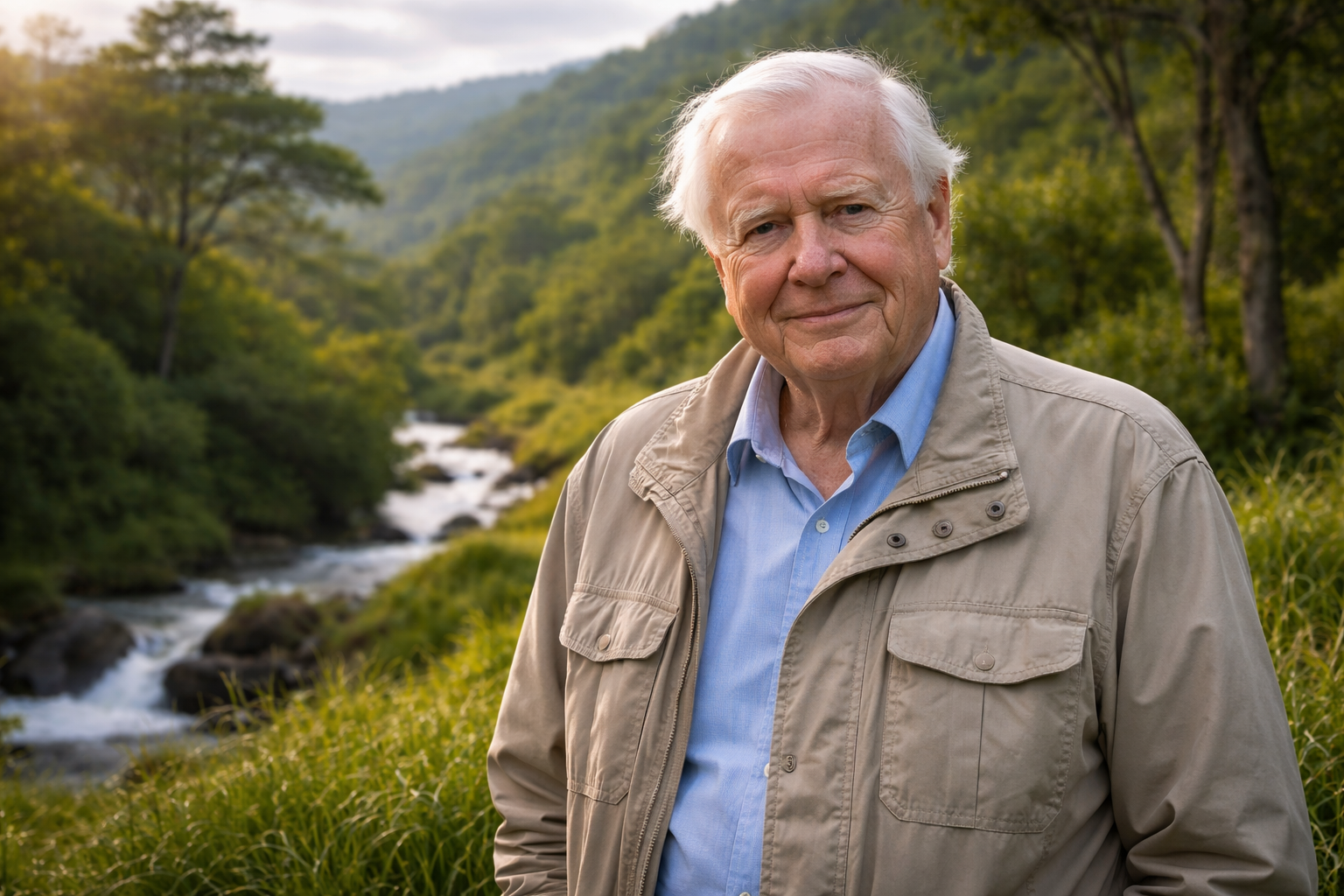
Sir David Attenborough is one of Britain’s most cherished broadcasters and natural historians, renowned for bringing the wonders of the natural world into millions of homes. With a career spanning over seven decades, his voice and storytelling have become synonymous with wildlife documentaries. For audiences across the UK and beyond, Attenborough represents not only education and discovery but also a powerful call to protect our planet.


Sir David Attenborough, a leading voice in natural history broadcasting.
Early Life and Career Beginnings
David Attenborough was born in 1926 in London and grew up in Leicester, where his early fascination with nature began. As a young boy, he collected fossils and studied wildlife, showing a curiosity that would later define his career.
After studying Natural Sciences at the University of Cambridge, he joined the BBC in the early 1950s. His breakthrough came with the programme Zoo Quest, which allowed viewers to explore exotic animals and distant lands—something quite rare for television at the time.


Attenborough during his early broadcasting years with the BBC.
Revolutionising Wildlife Documentaries
Attenborough transformed how people experience nature through television. His work with the BBC Natural History Unit led to groundbreaking series such as Life on Earth, The Blue Planet, and Planet Earth. These programmes combined scientific accuracy with cinematic storytelling.
What set him apart was his ability to make complex ecological concepts accessible and engaging. His calm narration, paired with stunning visuals, allowed audiences to feel deeply connected to wildlife.
Key contributions include:
- Introducing high-definition and innovative filming techniques
- Showcasing rarely seen animal behaviours
- Bringing global ecosystems into living rooms across the UK


Iconic scenes from Attenborough’s revolutionary wildlife documentaries.
Environmental Advocacy and Global Impact
In recent decades, Attenborough has become a leading voice in environmental conservation. His documentaries increasingly highlight urgent issues such as climate change, biodiversity loss, and ocean pollution.
Programmes like A Life on Our Planet serve as both a witness statement and a warning. He emphasises the need for sustainable living and collective action.
In the UK, his influence has:
- Raised public awareness about climate issues
- Inspired policy discussions and environmental education
- Encouraged younger generations to engage with conservation


Attenborough’s work highlights urgent environmental challenges facing the planet.
Legacy and Continued Relevance
Even into his later years, Attenborough remains highly active. His voice continues to narrate new series, and his message has only grown more urgent. He is widely respected across generations in the UK—from schoolchildren to policymakers.
His legacy lies not only in broadcasting but also in shaping how society understands and values the natural world. Few figures have had such a lasting cultural and educational impact.


Attenborough continues to influence global conversations on nature and sustainability.
Conclusion
Sir David Attenborough’s life and career represent an extraordinary contribution to both broadcasting and environmental awareness. Through his work, he has educated, inspired, and challenged audiences across the UK and the world.
As environmental concerns become increasingly urgent, his message resonates more than ever: the future of our planet depends on the actions we take today. His legacy is not just in the films he has created, but in the awareness and responsibility he has instilled in generations.