
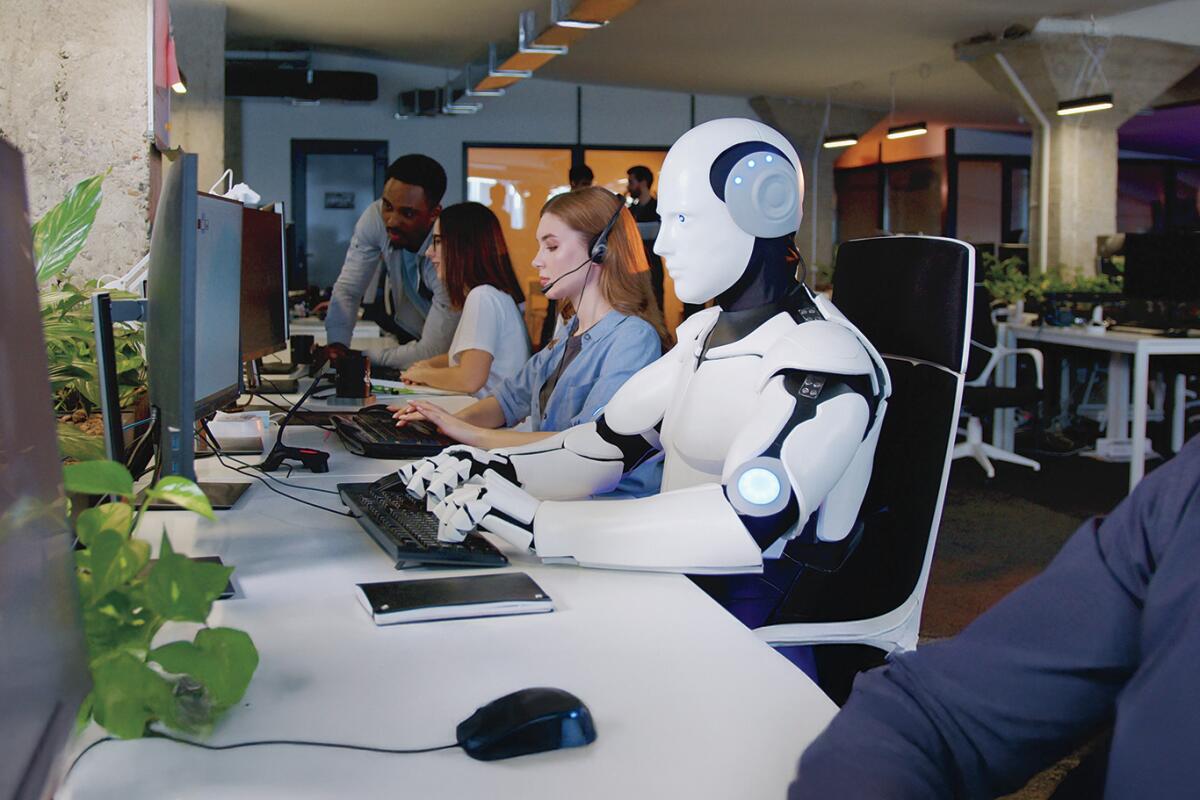
In 2026, artificial intelligence (AI) is no longer a futuristic concept—it has become the driving force reshaping workplaces around the globe. From agentic AI systems that autonomously handle complex tasks to multiagent collaborations that boost productivity, the technology is transforming how we work, earn, and compete. Yet this revolution brings both unprecedented opportunities and significant challenges, particularly for younger workers and emerging economies like Pakistan.
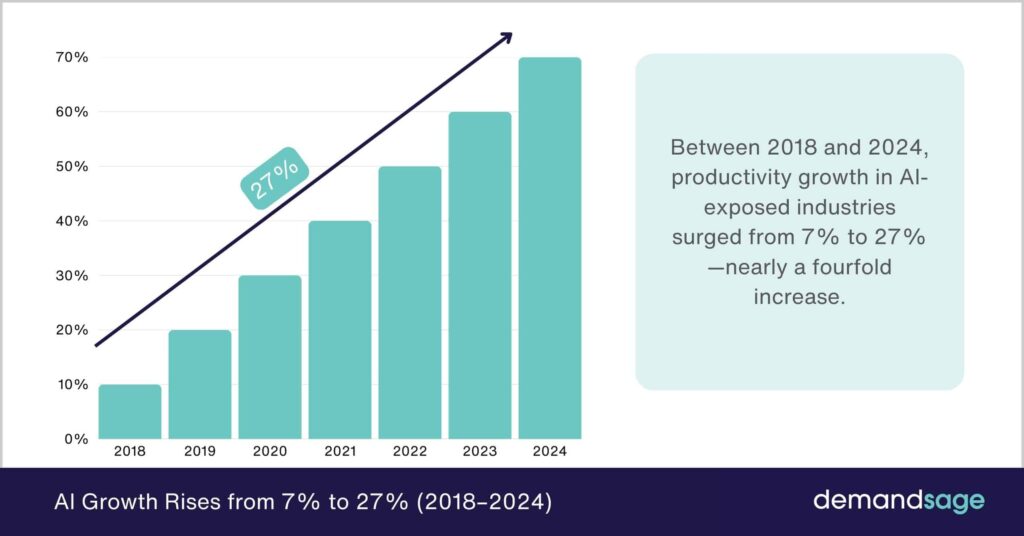
Experts predict that AI will not only automate routine jobs but also create new roles requiring human-AI collaboration. According to recent analyses, productivity in AI-exposed industries has surged dramatically, rising from 7% growth in 2018 to 27% by 2024, with continued acceleration into 2026. At the same time, companies are already citing AI potential as a reason for layoffs, even before full productivity gains materialize. This article explores the key trends, economic impacts, Pakistan-specific opportunities, ethical hurdles, and practical strategies for thriving in this new era.
The Evolution of AI in the Workplace
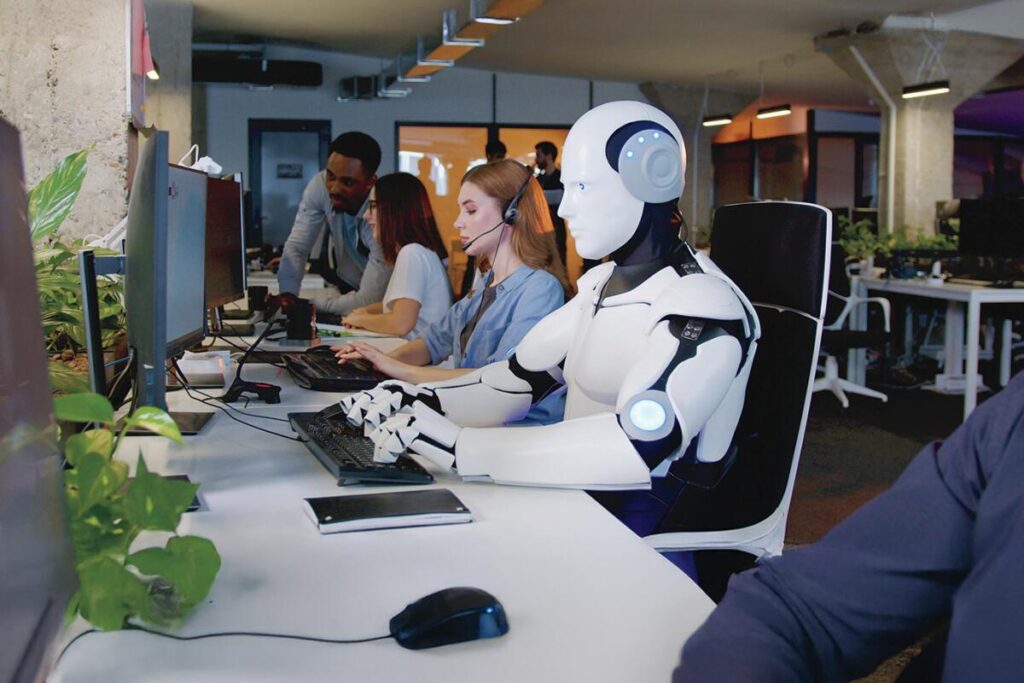
AI’s journey in the workplace began decades ago with simple automation tools, but the explosion of generative AI in 2022–2023 marked a turning point. By 2026, we have moved far beyond chatbots. Agentic AI—systems that can plan, reason, and execute multi-step tasks independently—has become mainstream. Microsoft and IBM experts highlight seven major trends for 2026, including AI as a true research partner in fields like physics and biology, smarter infrastructure for inference economics, and the rise of physical AI through robotics.
Gartner’s top strategic technology trends for 2026 emphasize AI-native development platforms, confidential computing, and multiagent systems where AI “colleagues” work alongside humans. Deloitte notes that organizations are shifting from experimentation to real impact, with AI converging with robotics to create hybrid workforces. In factories and offices alike, robots and humans now collaborate seamlessly, as seen in advanced manufacturing hubs.
This evolution is accelerating because of massive investments. Stanford AI experts predict that 2026 will be the year of “AI evaluation” rather than hype—companies will demand measurable returns, and discourse around artificial general intelligence (AGI) will quiet down as focus shifts to practical applications.
Positive Impacts: Productivity, New Jobs, and Economic Growth
The upside of AI is immense. Productivity gains are already evident, with AI-exposed sectors showing faster growth than the broader economy. Vanguard economists forecast stronger-than-expected U.S. and global growth in 2026 thanks to AI investments, potentially stabilizing labor markets. The World Economic Forum and similar studies project that while 92 million jobs may be displaced by 2030, 170 million new ones will emerge—a net gain of 78 million roles in areas like AI ethics, data curation, and human-AI system design.
In creative and knowledge work, AI acts as a powerful co-pilot. Writers, designers, and analysts complete tasks 2–3 times faster, freeing time for strategic thinking. In healthcare and finance, AI diagnostics and fraud detection save billions. For businesses, agentic workflows reduce “work about work”—automating scheduling, reporting, and follow-ups—so employees focus on innovation and relationships.
Pakistan is also benefiting. The country’s National AI Policy 2025 and Indus AI Week 2026 (launched under Prime Minister Shehbaz Sharif) signal strong government commitment, with a planned $1 billion investment by 2030. This includes training one million professionals, 1,000 PhD scholarships, and 50,000 AI-driven civic projects. IT exports and fintech are booming, with companies like Mobilink Bank investing heavily in AI. Local freelancers and startups are integrating AI into digital marketing, web development, and agriculture apps, helping Pakistan position itself as an emerging AI hub in South Asia.
Challenges and Risks: Job Displacement and Inequality
Despite the gains, the risks are real and immediate. In 2026, AI is already contributing to layoffs and slowed hiring, especially in white-collar sectors. Companies like Block (under CEO Jack Dorsey) announced 40% staff reductions, explicitly crediting “intelligence tools.” Entry-level roles for workers under 25 have seen up to 13% employment decline in AI-exposed industries since late 2022, according to Stanford’s “Canaries in the Coal Mine” study.
The International Monetary Fund estimates 40% of global jobs face AI-driven change, with advanced economies seeing higher exposure. In the U.S., unemployment in computer systems design has dropped 5% since ChatGPT’s launch, hitting young professionals hardest. CEOs from Anthropic, Ford, and OpenAI have publicly warned of 10–20% unemployment spikes in the coming years if displacement outpaces reskilling.
Developing countries like Pakistan face a dual challenge: automation in traditional sectors (banking, manufacturing, retail) could displace millions, while the skills gap leaves many behind. A recent study shows employment in AI-vulnerable occupations is already 3.6% lower in high-AI-demand regions. Without urgent intervention, inequality will widen—high-skill workers will thrive with wage premiums up to 23%, while others struggle.
AI in Pakistan: Local Opportunities and Ground Realities
Pakistan’s AI story in 2026 is one of cautious optimism. Adoption is high—86% of professionals now use AI tools daily, according to local surveys. The Digital Nation Pakistan Act and Pakistan Digital Authority are coordinating national efforts. Sectors like agriculture (crop prediction via AI), healthcare (telemedicine diagnostics), and finance (fraud detection) are seeing real gains.
However, challenges persist: limited digital infrastructure in rural areas, governance gaps, and a massive need for reskilling. The government’s target of training one million non-IT professionals is ambitious but critical. Private initiatives through platforms like DigiSkills.pk and university programs are helping, but experts warn that without focused investment in AI literacy for youth, the country risks missing the boat while global players race ahead.
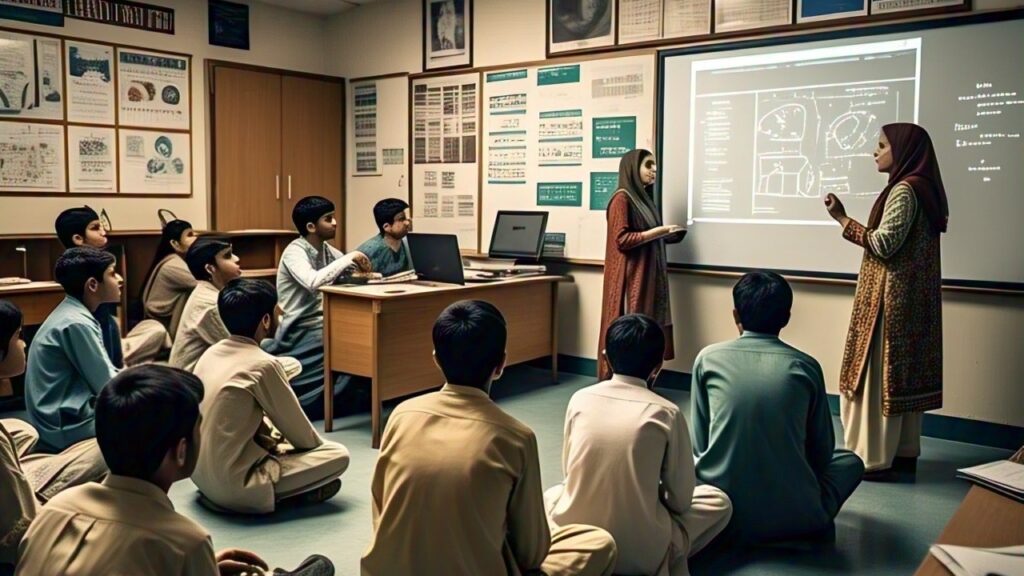
Young Pakistanis in cities like Hyderabad, Karachi, and Lahore are already leveraging free tools to learn prompt engineering, data analysis, and AI ethics—skills that command premium freelance rates on Upwork and Fiverr.
The Skills of the Future: What Workers Need in 2026
To succeed, workers must blend technical and human skills. Top priorities include:
- AI literacy and prompt engineering
- Data interpretation and critical thinking
- Emotional intelligence and creativity (areas AI still struggles with)
- Lifelong learning and adaptability
Organizations should invest in upskilling programs. Governments can support through subsidies, tax incentives for training, and public-private partnerships. In Pakistan, integrating AI modules into school and university curricula (as seen in some private institutions) will be game-changing.
Ethical Challenges and Responsible AI
As AI agents gain autonomy, ethical questions intensify. Bias in algorithms, privacy violations, deepfakes, and accountability for AI decisions remain major concerns. The EU AI Act (fully in force in 2026) sets a global benchmark, but many countries, including Pakistan, are still developing regulations.
Businesses must embed ethics from the start—transparent algorithms, human oversight for high-stakes decisions, and clear governance. Without this, public trust will erode, slowing adoption.
Strategies for Individuals, Companies, and Governments
Individuals: Start learning today—free platforms like Coursera, Google AI courses, and local DigiSkills programs are excellent. Build a portfolio showcasing human-AI collaboration.
Companies: Adopt federated AI approaches (multiple models for better accuracy), focus on augmentation rather than pure replacement, and measure ROI honestly.
Governments: Pakistan’s $1 billion plan is a strong start; accelerate implementation with public AI sandboxes, tax breaks for AI startups, and international collaborations.
Looking Ahead to 2030 and Beyond
By 2030, AI could add trillions to global GDP, but only if societies manage the transition fairly. The “AI bubble” may deflate slightly in 2026 as expectations meet reality, but long-term growth remains strong. Countries and individuals who invest in people alongside technology will lead.
Conclusion
The impact of artificial intelligence on the future of work in 2026 is profound—neither purely utopian nor dystopian. It offers massive productivity gains and new opportunities while demanding adaptation. For Pakistan, with its young population and growing tech ecosystem, 2026 is a pivotal year to seize the moment through policy, education, and innovation.
The future of work isn’t about humans versus machines—it’s about humans + machines. Those who embrace this partnership with skills, ethics, and resilience will not just survive but thrive in the AI era.