


In recent years, California has been at the forefront of innovative economic relief programs to combat poverty and support families. While headlines about a $725 stimulus check have circulated widely online, it’s important to understand that this is not a universal statewide payment like the earlier Golden State Stimulus programs. Instead, the $725 payments are part of the Family First Economic Support Pilot (FFESP), a targeted guaranteed income program run by Sacramento County.
This pilot program provides monthly payments of $725 to selected eligible families for 12 months. As of March 2026, many participants are still receiving these payments, which are set to conclude in May 2026 for the current cohort. New applications for this round appear closed (it was lottery-based earlier), but you can contact FFESP staff via ffesp.net/contact-us for any potential future updates. This article provides a comprehensive, detailed breakdown of eligibility, application process, benefits, and context to help Californians understand if they or someone they know might qualify or benefit from similar future programs.
Background on Stimulus and Guaranteed Income in California
California’s approach to economic support has evolved from one-time stimulus checks during the COVID-19 pandemic to more sustained support through pilot programs. The Golden State Stimulus I and II, issued in 2021-2022, provided one-time payments up to $600–$1,050 to millions of residents based on 2020 tax returns and income limits (typically under $75,000 AGI for individuals). These programs are now complete, with no new payments being issued.
In contrast, guaranteed income pilots like FFESP draw from the concept of unconditional cash transfers. These programs, inspired by experiments in places like Stockton, California (SEED program), aim to provide regular payments without strings attached to allow recipients to address their specific needs. The FFESP is funded primarily through the Sacramento County Department of Child, Family and Adult Services (DCFAS) using state block grant funds and facilitated with partners like United Way California Capital Region.
The focus on families with young children (ages 0-5) is strategic, as early childhood is a critical period for development, and financial stress can impact parenting and child outcomes. Similar pilots exist or have existed across California under the state’s Guaranteed Income Pilot Program overseen by the California Department of Social Services (CDSS), targeting groups like pregnant individuals, former foster youth, and now older adults in planning stages. These initiatives test how direct cash can reduce poverty more effectively than traditional welfare alone.
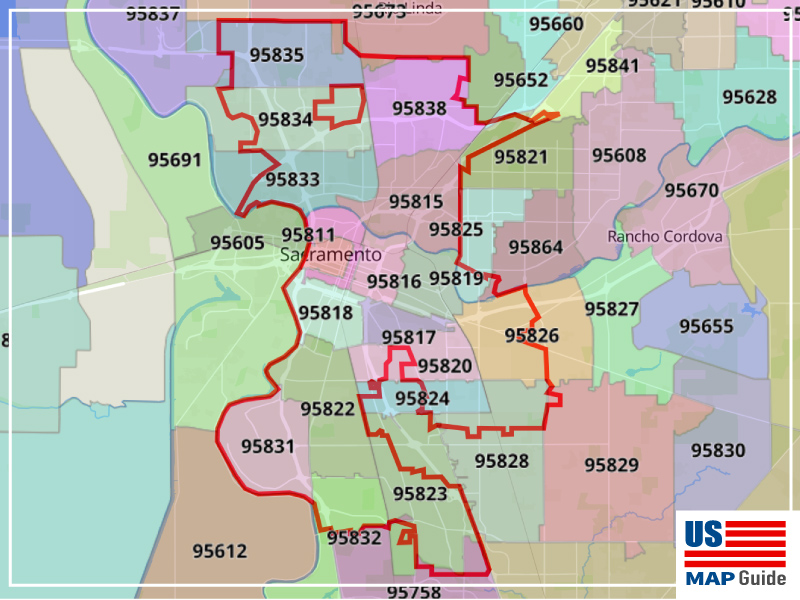
Sacramento, CA Zip Code Map (28 Zip Codes) – US Map Guide
Image 1: Sacramento County ZIP code map (eligible areas highlighted in red on similar public maps – exact ZIPs listed below).
Detailed Eligibility Criteria
To qualify for the FFESP $725 monthly payments, applicants had to meet strict criteria. The program was not open to all Californians or even all Sacramento residents—it’s limited to specific high-need ZIP codes.
- Residency Requirements: Participants must live full-time in one of the following Sacramento County ZIP codes: 95815, 95821, 95823, 95825, 95828, or 95838. These areas were chosen based on higher rates of poverty and child welfare involvement. Proof of residency (utility bills, lease agreements) was typically required.
- Family Composition: You must be the parent or legal guardian and primary caregiver of at least one child between the ages of 0 and 5 years old. The child must reside with you a significant portion of the time. This targets support during the crucial early years when families often face high costs for childcare, housing, and essentials.
- Income Limits: Household income must be below 200% of the Federal Poverty Level (FPL). The exact thresholds depend on household size and the guidelines used by the program. According to 2026 federal guidelines (and program examples adjusted for selection period):
- Household of 2 (1 adult + 1 child): Under ~$43,280/year
- Family of 3: Under ~$54,640/year
- Family of 4: Under ~$66,000/year (Program site referenced slightly lower figures like $62,400 for family of 4 based on prior-year guidelines at enrollment.)
What is the federal poverty level (FPL)? | 2026 Coverage Guidelines
Image 2: Official 2026 Federal Poverty Level Chart (use this table to check your household size and 200% limit).
- Other Requirements and Exclusions:
- Cannot be currently participating in another guaranteed income program.
- Must demonstrate legal guardianship or parental rights.
- Emphasis on serving underserved communities (e.g., African American, Native American families).
- U.S. citizenship or qualifying immigration status generally required.
The program used a lottery or random selection process for limited spots (around 200 families), with applications opening in late 2024 and additional rounds in 2025.
How the Program Works and Payments
Selected participants receive $725 directly each month, typically via direct deposit or prepaid debit card, for a full 12-month period (June 2025 through May 2026 for the current group). The payments are unconditional—recipients can use them for rent, food, childcare, transportation, or any other need. Importantly, these payments are often exempt from counting as income for other benefits like CalWORKs or CalFresh under state rules.
To receive payments, enrollees maintain updated contact and banking information and may participate in optional surveys for program evaluation. As of March 2026, support is ongoing for selected families until May 2026.

California TK hits a milestone: all 4-year-olds now eligible – CalMatters
Image 3: Low-income family with young children receiving support (illustration of positive early childhood development aided by financial stability).
Benefits and Real-World Impact
Guaranteed income programs have shown promising results in studies. In similar Sacramento and California pilots, recipients reported 49% financial improvement (vs. 16% in control groups), reduced food insecurity, and better housing stability. For families with young children, extra cash can mean better nutrition, stable housing, access to developmental activities, and reduced parental stress—which correlates with better cognitive and emotional development in kids.
In Sacramento, the FFESP aims to prevent family separation and involvement with child protective services by providing economic stability. Preliminary data from similar programs indicate high usage for basic needs and some for education or job training. Economically, $725/month can cover a significant portion of childcare costs or help with rising California housing expenses.
Who Does Not Qualify and Common Misconceptions
Many people searching for “California $725 stimulus check” may be disappointed. If you live outside those six ZIP codes or don’t have a child under 6, you likely don’t qualify for this specific program. It’s not based on filing state taxes alone, and it’s not automatic. There is no broad $725 one-time check for all low-income Californians in 2026. Beware of scams promising “stimulus checks” that ask for personal info or fees.
Other Financial Support Options in California
Even if you miss this pilot, California offers robust assistance:
- CalWORKs (cash aid for families with children)
- CalFresh (food stamps)
- California Earned Income Tax Credit (CalEITC) – up to several thousand dollars
- Medi-Cal health coverage
- Housing and utility assistance
Check benefits.ca.gov or mybenefitscalwin.org for screenings.
The Future of Stimulus and Guaranteed Income
As the FFESP wraps up in 2026, evaluations will inform whether to expand. Governor Newsom and the legislature have supported GI pilots, and with ongoing inflation and housing crises, more counties may launch similar programs. California could lead with data-driven expansions targeting more ZIP codes or demographics.
Conclusion
The Family First Economic Support Pilot represents an innovative, evidence-based approach to family support in California. While eligibility is narrow—limited to specific Sacramento areas and families with young children—the $725 monthly payments provide meaningful relief to those selected. For accurate, up-to-date information, visit the official FFESP website at ffesp.net or contact Sacramento County DCFAS.
If you’re in one of the eligible ZIP codes and have a young child, reach out promptly as opportunities are limited. For all Californians, staying informed about tax credits, local aid, and budget proposals is key to maximizing financial wellness. Always consult official sources and consider consulting a tax professional or benefits counselor for personalized advice. Economic support programs evolve, so check regularly for new initiatives.
Sources: ffesp.net (official program site), California Department of Social Services, 2026 HHS Federal Poverty Guidelines, and related news reports from 2025-2026.