


Why Funding Mastery Drives Business Growth in the USA
Business growth without capital is like trying to accelerate a car with an empty tank. In 2026, US companies face rising costs, talent competition, and AI-driven disruption. Proper funding fuels hiring, R&D, marketing, and market expansion—key drivers of 20-50% annual revenue growth for funded firms.
The current landscape favors disciplined founders. Venture capital has shifted to a “value creation era,” where investors demand strong unit economics, clear paths to profitability, and defensible moats. Liquidity is returning via IPOs and M&A, but capital remains concentrated: AI deals dominate, while non-tech businesses must prove traction through debt or alternative sources.
Mastering growth navigate funding means choosing the right mix of debt, equity, and non-dilutive capital. Done right, it accelerates your trajectory; done wrong, it leads to cash-flow crises or loss of control.
The 2026 US Funding Landscape: What Every Entrepreneur Must Know
America remains the undisputed leader in startup funding. North America attracted nearly 73% of global VC in early 2025, with the Bay Area alone pulling in over half of US dollars. Yet the market is selective. Seed-stage deals stay resilient, while growth-stage rounds (Series B+) require proven metrics.
Key trends shaping growth navigate funding:
- AI and tech concentration: Mega-rounds like OpenAI’s $110B and Anthropic’s $30B highlight investor appetite for high-potential sectors.
- IPO and M&A rebound: Secondary markets and public listings offer new exit paths.
- Disciplined valuations: Post-2021 corrections mean realistic multiples and stronger fundamentals.
For SMEs outside tech, traditional and government-backed options remain vital. The SBA guarantees billions in loans annually, while private grants target women, minorities, and innovative founders.
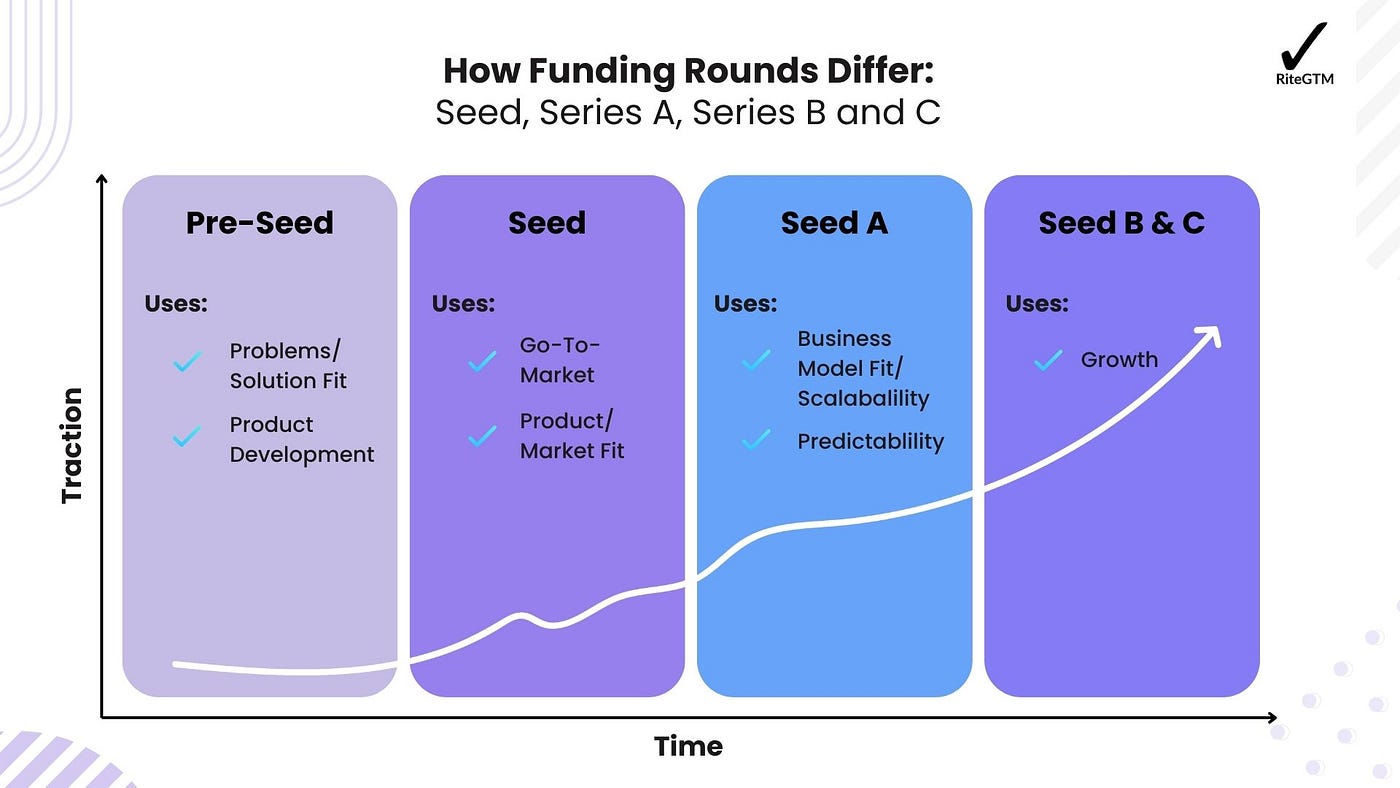
Navigating the Startup Funding Landscape: An Infographic Guide | by Rick Koleta | The Koleta Brief | GTM, AI, and B2B SaaS Growth
Image: Infographic breaking down startup funding stages—perfect for mapping your growth navigate funding journey.
Types of Funding Options to Fuel Your Growth
No single source fits every stage. Here’s how to growth navigate funding across the US business lifecycle:
- Bootstrapping & Self-Funding Use personal savings, credit cards, or revenue reinvestment. Ideal for pre-seed validation. Pros: Full control, no dilution. Cons: Limits speed. Many successful US brands (e.g., Mailchimp) scaled this way initially.
- Debt Financing – SBA Loans & Bank Loans SBA 7(a) loans offer up to $5.5M with government guarantees and competitive rates. 504 loans finance real estate/equipment, while microloans suit startups under $50K. Traditional bank term loans and lines of credit work best with 2+ years of revenue and strong credit. In 2026, expect faster approvals via Lender Match on SBA.gov.Learn more about SBA funding programs here
- Equity Funding – Angels, VCs & Crowdfunding Angel investors provide $25K–$500K early on. Venture capital shines for scalable models needing $1M+. In 2026, VCs prioritize AI, fintech, and climate tech but still back strong non-tech plays with clear TAM. Crowdfunding platforms (Kickstarter, Republic) deliver validation plus capital without traditional gatekeepers.
- Grants & Non-Dilutive Capital SBIR/STTR programs offer up to $2M for tech innovation via NSF. Private grants like Amber Grant (women-led) or Amex Shop Small deliver $10K–$50K monthly. Fearless Fund and Female Founders Fund target underrepresented founders.
- Alternative Options Revenue-based financing, invoice factoring, and equipment leasing bridge gaps without equity loss.

What Is an SBA Loan? Pros & Cons + How to Apply
Image: SBA loan types infographic—your go-to resource for debt-based growth navigate funding.
Step-by-Step Guide: How to Growth Navigate Funding Successfully
Follow this proven process used by thousands of US founders:
Step 1: Build a Rock-Solid Foundation Create a detailed business plan, financial projections (3-5 years), and pitch deck. Highlight traction metrics: revenue growth, customer acquisition cost, and LTV. Use free tools like SCORE or SBA templates.
Step 2: Choose Your Funding Path Match stage to source. Pre-revenue? Bootstrap + grants. Post-MVP with users? Angels or crowdfunding. Scaling fast? Prepare for VC.
Step 3: Master the Pitch Your deck must explain the opportunity in the first five minutes. Practice relentlessly—avoid reading slides. Show market size, team strength, and use-of-funds. Tailor to investor thesis.
Step 4: Network & Apply Strategically Attend events like Venture Atlanta or use LinkedIn. For SBA, use Lender Match. For VCs, warm intros beat cold emails.
Step 5: Negotiate & Close Understand term sheets. Seek legal review. Track milestones post-funding to unlock future rounds.
Step 6: Monitor & Iterate Funding is ongoing. Review quarterly and adjust strategy as your business evolves.

Pitching to Investors: What You Need To Know | Startups.com
Common Challenges & Proven Solutions
- Rejection fatigue: Solution—apply broadly and refine based on feedback.
- Dilution fears: Solution—use convertible notes or revenue-based deals early.
- Documentation overload: Solution—digitize records and use tools like DocuSign.
- Market timing: In 2026’s selective environment, focus on profitability over hype.
Women- and minority-owned businesses face extra hurdles but benefit from targeted grants and accelerators like 500 Global.
Real-World Success Stories
OpenAI navigated massive funding rounds by demonstrating unmatched AI traction. Closer to home, countless SBA-backed Main Street businesses expanded during economic shifts using 7(a) loans. One Midwest manufacturer used a 504 loan to buy equipment, doubling output and hiring 50 workers in 18 months—classic growth navigate funding in action.
Future Trends & Actionable Tips for 2026+
Expect continued AI dominance, rising secondary markets, and geographic diversification beyond Silicon Valley. Tips:
- Build relationships before you need money.
- Track KPIs obsessively—investors love data.
- Diversify sources to reduce risk.
- Stay compliant with US regulations (e.g., Reg CF for crowdfunding).
Explore the latest VC trends on Forbes
How to Get Approved for a Small Business Loan
Conclusion: Take Control of Your Growth Navigate Funding Journey
Growth navigate funding isn’t about chasing every dollar—it’s about strategic alignment that fuels sustainable US business expansion. Start today: Visit SBA.gov for Lender Match, polish your pitch deck, and identify your next capital source.
With the right approach, 2026 can be your breakout year. Whether bootstrapping, securing an SBA loan, or closing a VC round, disciplined execution turns funding into lasting growth.
Ready to act? Download free SBA resources or connect with a local SCORE mentor. Your growth story starts with one smart funding decision.