
In 2026, artificial intelligence is no longer a futuristic buzzword — it’s the ultimate competitive edge for small businesses. According to the 2026 Small Business AI Outlook Report, 57% of U.S. small businesses are now actively investing in AI (up from just 36% in 2023), while Forbes predicts that by the end of 2026, more than 80% will use AI for marketing alone. Australian SMEs are following the same trajectory, with digital marketing agencies like Gonzay reporting massive demand for AI-integrated SEO and automation solutions.
For small and medium enterprises (SMEs) with limited budgets and teams, the right AI trends can mean the difference between surviving and thriving. This guide breaks down the seven most impactful AI trends for small businesses in 2026, complete with real-world use cases, affordable tools, and step-by-step implementation tips. Whether you run a local retail store in Sydney, an e-commerce brand in Melbourne, or a service business in Perth, these trends are designed to deliver quick ROI.
Why AI Adoption Is Exploding Among Small Businesses in 2026
Small businesses have always faced the same challenges: limited staff, tight budgets, and fierce competition from larger players. AI solves these pain points at scale. PwC’s 2026 AI Business Predictions highlight “agentic workflows” and responsible AI as the biggest drivers of value this year. Unlike 2024-2025 when AI was mostly used for basic chatbots and content generation, 2026 marks the era of autonomous AI agents that can plan, execute, and optimize tasks with minimal human input.
For SMEs, the benefits are crystal clear:
- Cost savings: Automate repetitive tasks and reduce labour expenses by 30-50%.
- Revenue growth: Hyper-personalized marketing and predictive sales forecasting.
- Competitive edge: Level the playing field against big corporations.
Now let’s dive into the trends that matter most.
1. Agentic AI: Autonomous Workflows That Run Your Business
One of the biggest AI trends for small businesses in 2026 is agentic AI — AI systems that don’t just answer questions but take independent action. Think of them as digital employees that can handle entire workflows.
Practical use cases for SMEs:
- Customer support agents that resolve 70% of tickets without human help (routing, refunds, follow-ups).
- Sales agents that qualify leads, book meetings, and even send personalized proposals.
- Finance agents that process invoices, match purchase orders, and flag anomalies.
How to start: Tools like custom GPTs in ChatGPT Enterprise, Claude Projects, or affordable platforms such as Bitrix24 AI and Make.com + AI agents are perfect for small teams. A small retail business in Australia can set up an agent that monitors inventory, predicts stock needs, and automatically places supplier orders.
2. Hyper-Personalization at Scale
Gone are the days of generic email blasts. In 2026, AI-driven hyper-personalization is standard even for businesses with under 50 employees.
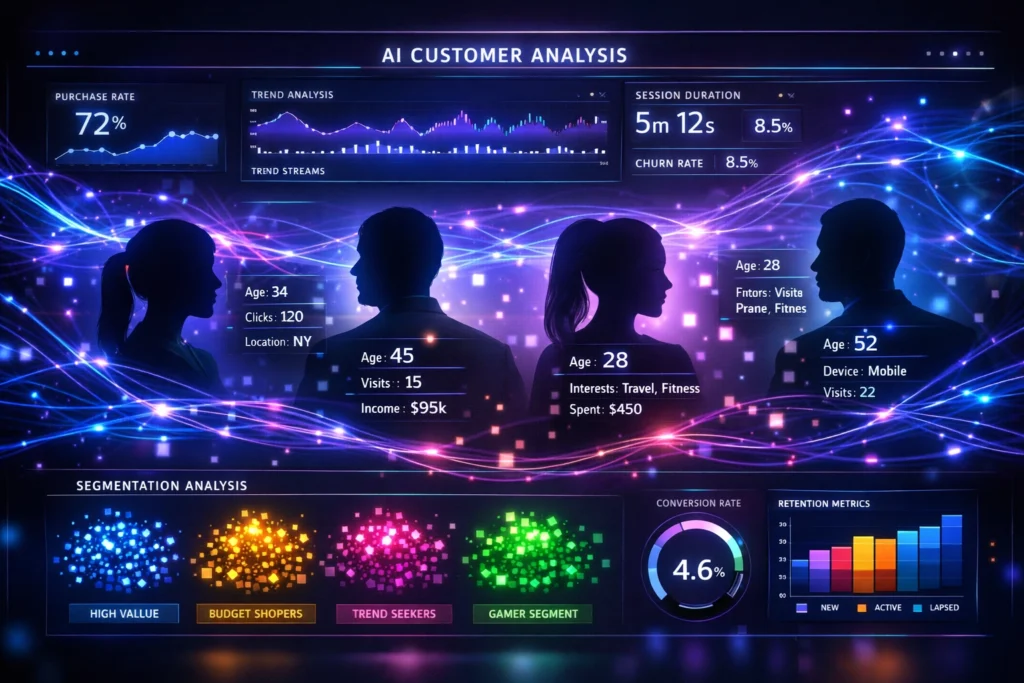
AI analyzes customer behaviour across email, website, social media, and purchase history to deliver one-to-one experiences. Thryv’s 2026 marketing trends report notes that AI personalization is now “standard for small businesses.”
Real results:
- 40% higher open rates on emails.
- 25-35% increase in conversion rates.
- Stronger customer loyalty and repeat business.
Tools for small businesses: Klaviyo (e-commerce), ActiveCampaign, or even free tiers of HubSpot with AI features. A café in Brisbane can use AI to send “Your usual flat white is 20% off today because it’s raining” messages based on past visits and weather data.
3. AI-Powered SEO and Search Optimization
Search engines in 2026 are dominated by AI Overviews (Google) and conversational search. Traditional keyword stuffing is dead. Instead, AI SEO focuses on topical authority, structured content, and multi-platform visibility.
StudioHawk’s 2026 SEO predictions emphasize “AI SEO goes mainstream” and the shift toward platform-agnostic search (Google, YouTube, Reddit, social).
Actionable strategies for SMEs:
- Use AI tools to cluster keywords and create comprehensive content hubs.
- Generate schema markup and meta descriptions automatically.
- Optimize for voice and visual search.
Best tools: Surfer SEO, Frase, or Gonzay’s own recommended SEO frameworks combined with AI writers like Jasper or Claude.
4. Predictive Analytics for Smarter Decisions
Small businesses can now forecast demand, cash flow, and customer churn with surprising accuracy using affordable AI tools.
Key applications:
- Inventory prediction (reduce stockouts by 60%).
- Sales forecasting.
- Customer churn prevention.
Salesforce’s small business trends report highlights that AI + CRM tools are helping SMEs improve efficiency dramatically in 2026.
5. AI Automation for Operations and Finance
From invoicing to scheduling and supply chain, AI is handling the boring stuff so owners can focus on growth.
Popular use cases in 2026:
- Automated bookkeeping (Xero + AI integrations).
- Smart scheduling for staff.
- Document intelligence (extracting data from PDFs and contracts).
6. Conversational AI and Voice Commerce
Voice search and AI chat are now core to customer experience. Short-form video + AI voiceovers are dominating social media.
7. Responsible AI and Human + AI Collaboration
The smartest SMEs in 2026 aren’t replacing humans — they’re augmenting them. Gartner predicts 50% of teams will require “AI-free” skills tests to balance creativity with automation.
Top AI Tools Every Small Business Should Use in 2026
| Tool | Best For | Starting Price (2026) | SME Rating |
|---|---|---|---|
| Claude 3.5 / Opus | Content + strategy | Free tier available | 9.5/10 |
| Bitrix24 AI | All-in-one CRM + tasks | Free for small teams | 9/10 |
| Make.com + AI | Automation workflows | $9/month | 9.5/10 |
| Klaviyo AI | Email & SMS marketing | Free under 250 contacts | 9/10 |
| Surfer SEO | AI-powered content SEO | $59/month | 9/10 |
Challenges Small Businesses Face (and How to Overcome Them)
- Cost: Start with free tiers and open-source tools.
- Skills gap: Use no-code platforms and short online courses.
- Data privacy: Choose tools with strong Australian compliance (e.g., GDPR + local laws).
- Over-reliance on AI: Always keep human oversight for final decisions.
Real-World Success Stories
A Melbourne-based e-commerce store implemented AI chatbots and predictive inventory tools in early 2026 and reported a 42% reduction in operational costs and 28% revenue growth within six months.
A Sydney digital agency used AI agents for client reporting and content creation, freeing up 15 hours per week per team member.
How to Get Started with AI Trends for Small Businesses in 2026
- Audit your current processes — identify repetitive tasks.
- Pick one high-impact area (marketing or customer service is easiest).
- Choose 1-2 affordable tools and test for 30 days.
- Measure ROI using simple metrics (time saved, revenue gained).
- Scale gradually while training your team.
Conclusion: The AI Advantage Is Yours to Claim
The AI trends for small businesses in 2026 are not about fancy technology — they’re about practical, measurable growth. SMEs that embrace agentic AI, hyper-personalization, and AI-powered SEO today will dominate their markets tomorrow.
Don’t wait for 2027. Start small, stay consistent, and watch your business scale faster than you ever thought possible.
Ready to implement these AI trends? Comment below with your biggest challenge or contact Gonzay for a free AI strategy session tailored to Australian SMEs.