
Fire emergencies are one of the most terrifying situations anyone can face. Whether it’s at home, in the office, a school, or a hospital, seconds matter. That’s why millions of people worldwide are trained on a simple four-letter system called the RACE acronym.
If you’ve ever searched “race acronym” or wondered what it means in an emergency context, you’re in the right place. In this complete guide, we’ll break down everything about the RACE acronym — its meaning, step-by-step explanation, real-life examples, training tips, variations, and why it remains the gold standard in fire safety even in 2026.
Knowing the RACE acronym can literally save lives. According to global fire safety statistics, proper training using simple mnemonics like RACE reduces panic and improves response time by up to 70%. Let’s dive deep.
What Does the RACE Acronym Stand For?
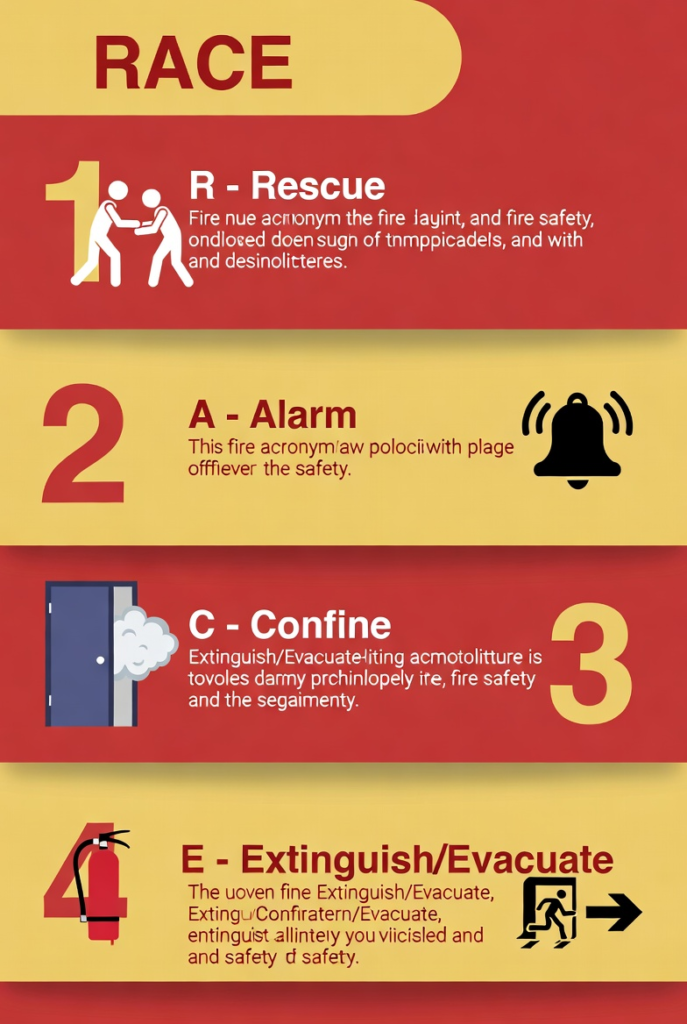
The RACE acronym stands for: R – Rescue (or Remove) A – Alarm (or Alert) B – Confine (or Contain) E – Extinguish (or Evacuate)
This simple, easy-to-remember system was developed by fire safety experts for workplaces, healthcare facilities, schools, and homes. Different organizations may use slight variations in wording (Rescue vs Remove, Extinguish vs Evacuate), but the core purpose remains the same: protect life first, then control the fire.
The beauty of the RACE acronym is its simplicity. In high-stress situations, people don’t remember long procedures — they remember four letters. This is why it’s taught in OSHA training, hospital fire drills, school safety programs, and even residential fire safety workshops worldwide.
Step-by-Step Breakdown of the RACE Acronym
R – Rescue (Remove People from Immediate Danger)
The very first priority in any fire is human life. The “R” in RACE stands for Rescue or Remove.
If you see someone in immediate danger — trapped in a room, unconscious, or unable to escape — your first action is to get them to safety only if it is safe for you to do so. Never put yourself in unnecessary danger.
Example: In a hospital, nurses are trained to wheel bedridden patients out of the affected area first. In an office, help colleagues who are elderly or disabled.
Key tip: Move people to the nearest safe exit or designated assembly point. Do not stop to collect belongings.
A – Alarm (Activate the Fire Alarm and Call for Help)
Once people in immediate danger are rescued, the next step is to sound the alarm.
Pull the nearest fire alarm pull station, shout “Fire!” or “Code Red!”, and dial emergency services (911 in the US, 112 in Europe, or local number). Inform others around you so everyone knows to evacuate.
Modern buildings have automatic alarms, but in smaller spaces or homes, manually activating the alarm can save precious minutes.
Remember: The faster the alarm is raised, the faster professional firefighters arrive.
C – Confine (Contain the Fire and Smoke)
After raising the alarm, confine the fire by closing all doors and windows in the affected area. This step prevents oxygen from feeding the fire and stops deadly smoke from spreading to other parts of the building.
Close fire doors if available. Do not open doors that feel hot — it may mean fire is right behind them. Stuff wet towels under doors if needed to block smoke.
Confining the fire buys time for firefighters and protects escape routes. This step is often underestimated but can reduce property damage dramatically.
E – Extinguish (or Evacuate)
The final step in the RACE acronym has two options depending on the situation:
- Extinguish: If the fire is small (wastebasket size) and you are trained, use a fire extinguisher following the PASS method (Pull, Aim, Squeeze, Sweep).
- Evacuate: If the fire is growing or you are unsure, evacuate immediately. Never fight a fire if it blocks your escape route.
In most training programs today, experts emphasize “Evacuate” over fighting the fire because human life always comes first.
Why the RACE Acronym Is So Effective in 2026
In 2026, with smarter buildings and AI fire detection systems, the RACE acronym is still taught because technology can fail or be slow. Human response remains the weakest (and strongest) link.
Studies from the National Fire Protection Association (NFPA) show that buildings with regular RACE training have 60% fewer fatalities during fires. It works because it’s universal — from small offices to massive hospitals.
RACE Acronym in Different Settings
- Hospitals & Healthcare: Patient rescue is priority #1. Staff use special evacuation chairs and follow strict codes.
- Schools & Universities: Teachers use RACE to evacuate classrooms calmly.
- Offices & Workplaces: OSHA requires RACE training annually.
- Homes: Adapt it — Rescue family first, then alarm neighbors and evacuate.
- Hotels & Public Places: Guests are trained via floor plans showing RACE steps.
Common Mistakes People Make with the RACE Acronym
Many people panic and skip steps: they try to extinguish first (wrong!), forget to close doors, or go back for belongings. Training and drills fix these habits.
Related Acronym: PASS for Fire Extinguishers
When you reach the “E” step and decide to extinguish, remember PASS: Pull the pin Aim at the base of the fire Squeeze the handle Sweep side to side
RACE + PASS together form the complete fire response toolkit.
How to Train Your Team or Family on the RACE Acronym
- Conduct monthly fire drills.
- Use posters and infographics showing the RACE steps.
- Role-play different scenarios.
- Download free RACE acronym apps and videos (many available in 2026).
- Make it fun for kids — turn it into a game.
Variations of the RACE Acronym Around the World
Some countries use RACE as Rescue, Alarm, Confine, Evacuate. Others add “Report” or change to “Remove, Alert, Contain, Extinguish”. The principle stays the same — life safety first.
Final Thoughts: Make RACE Acronym Part of Your Life
The RACE acronym is more than just four letters — it’s a life-saving mindset. Whether you’re a business owner, parent, teacher, or employee, knowing and practicing RACE can protect the people you care about most.
Start today: Print this guide, share it with your team, and run your first drill this weekend. Fire doesn’t wait — but with the RACE acronym, you’ll be ready.