Flight diversions are uncommon in commercial aviation, but when they occur—especially on long-haul transatlantic routes—they underscore the industry’s strict safety protocols. United Airlines Flight UA967, operating from Naples International Airport (NAP) in Italy to Newark Liberty International Airport (EWR) in New Jersey, became the center of attention after an unexpected diversion on August 24, 2025. Already delayed by nearly three hours at departure, the Boeing 767 encountered a technical problem mid-flight over the Atlantic Ocean, forcing pilots to reroute to St. John’s International Airport (YYT) in Newfoundland, Canada.
This incident, still discussed in aviation communities in 2026, serves as a real-world example of how crews prioritize passenger safety over schedule adherence. Below, we break down the timeline, causes, passenger experiences, airline response, and broader lessons from the UA967 diversion.
.jpg?q=49&fit=crop&w=825&dpr=2)
United Airlines’ Longest Boeing 767-300ER Routes
Image: A United Airlines Boeing 767-300ER similar to the aircraft operating UA967, cruising at altitude. This wide-body jet is commonly used for transatlantic routes like Naples to Newark.
The Scheduled Route and Departure Delays
United Flight UA967 is a regular transatlantic service connecting southern Italy with the New York metropolitan area. Operated on a Boeing 767-300ER (registration N671UA, an aircraft over 25 years old at the time), the flight typically departs Naples around early afternoon local time and arrives in Newark after about 9-10 hours.
On August 24, 2025:
- Scheduled departure: Approximately 2:00 PM CEST.
- Actual departure: 5:13 PM CEST—nearly three hours late.
- Before takeoff, the aircraft returned to the gate at Naples for an unspecified reason, adding to passenger frustration.
Despite the delay, the flight took off and proceeded across the Atlantic as planned—until roughly seven hours into the journey.
The Mid-Flight Technical Issue and Diversion Decision
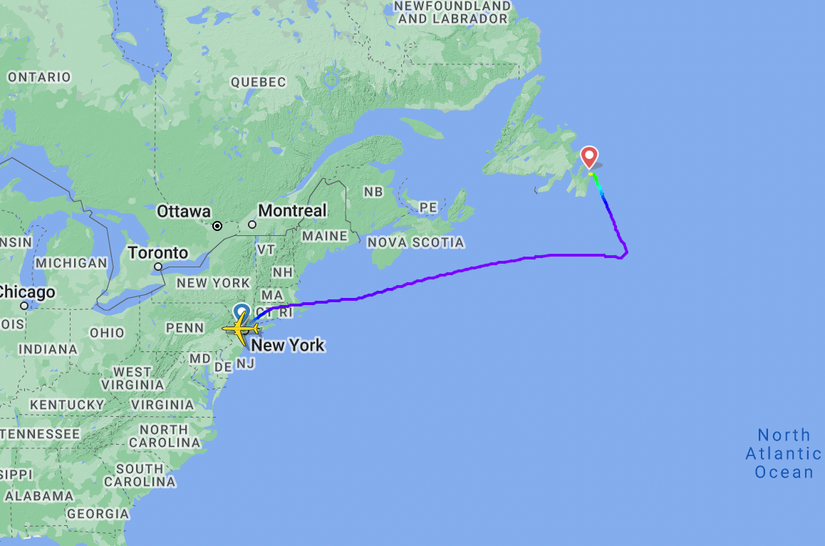
Approximately 460 nautical miles east-southeast of St. John’s, the crew detected a technical problem. Reports from aviation tracking sources and passenger accounts point to a burning odor or possible cabin smoke/smell issue, prompting immediate action.
Pilots followed standard procedures:
- Consulted with maintenance control.
- Ran checklists (including cabin air quality protocols).
- Declared an emergency for priority handling.
- Diverted to the nearest suitable airport: St. John’s (YYT), a common diversion point for transatlantic flights due to its location.
The decision was safety-first—no injuries occurred, and the aircraft landed safely on Runway 28 at around 8:25 PM local Newfoundland time.
United Airlines Boeing 767 Makes Emergency Landing In St Johns Reporting Cabin Smoke
Image: Approximate flight path visualization showing the diversion from mid-Atlantic to St. John’s, Newfoundland (based on typical transatlantic routing and reported coordinates).
Safe Landing in St. John’s: What Happened Next
Upon landing, passengers deplaned while maintenance teams inspected the aircraft. The technical issue was addressed on the ground, and the flight eventually continued to Newark, arriving in the early morning hours of August 25, 2025 (around 4:40 AM local time).
No major damage or injuries were reported. United Airlines issued a brief statement emphasizing that passenger safety was never compromised and apologizing for the inconvenience.
This event highlights why St. John’s is a key alternate airport for transatlantic routes—its long runways, emergency services, and position make it ideal for mid-ocean diversions.

New runway landing system completed at St. John’s airport | CBC News
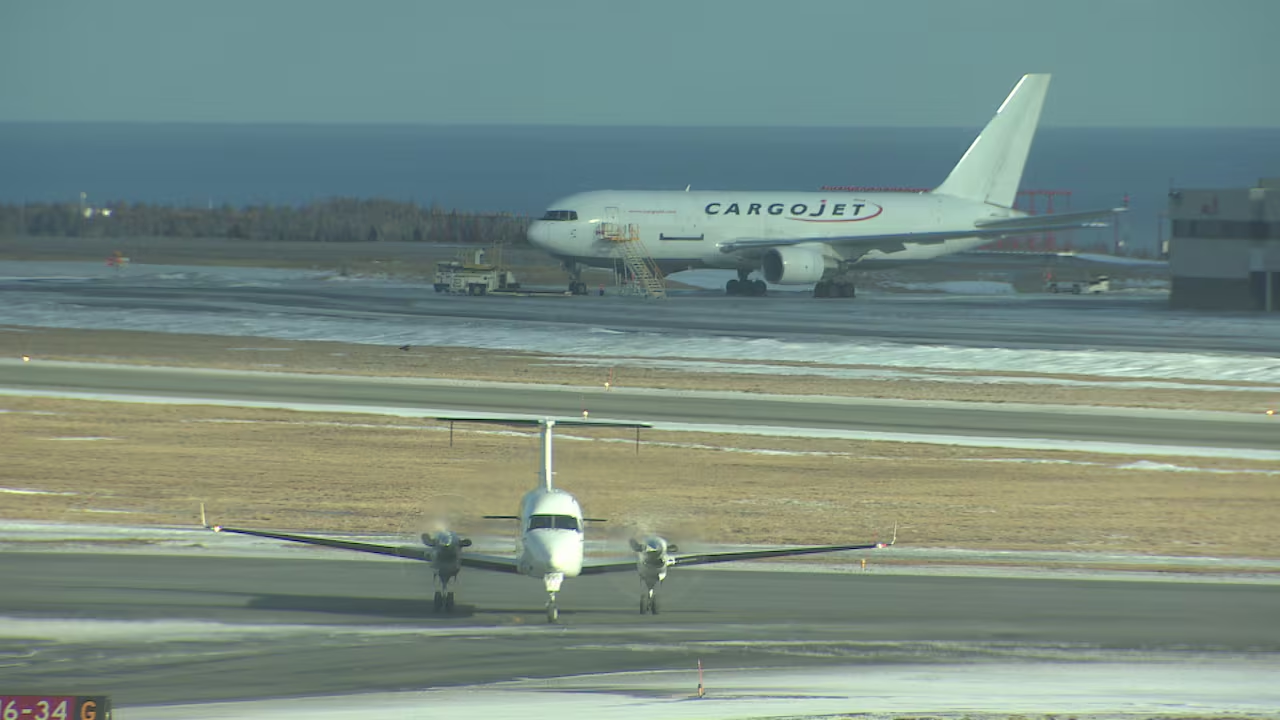
Image: St. John’s International Airport (YYT) runway and surrounding area, where UA967 made its safe emergency landing.
Passenger Experiences: From Confusion to Relief
For those onboard, the diversion turned a routine trip into a stressful ordeal. Initial announcements caused confusion, with passengers hearing only that a “technical issue” required diversion. Anxiety rose as the plane changed course over the ocean, but crew professionalism kept the situation calm.
Social media and forums (including Reddit discussions on EU261 compensation eligibility) captured reactions:
- Many praised the pilots and crew for clear communication.
- Frustrations focused on the initial gate delay and extended travel time (total added delay: 10-12+ hours).
- Some passengers discussed potential compensation, though EU261 rules have limited applicability for US-bound flights from outside the EU when diversions stem from technical issues.
Overall, the experience reinforced trust in aviation safety—problems are handled swiftly to prevent escalation.
Why Do Flight Diversions Happen? Common Causes
Diversions like UA967 are rare but follow strict protocols. Top reasons include:
- Technical or mechanical issues — odors, smoke, engine anomalies, or system failures.
- Medical emergencies — passenger or crew health concerns.
- Weather — severe storms, icing, or low visibility at destination.
- Fuel/operational factors — though less common on modern aircraft.
In UA967’s case, the technical issue (likely related to cabin air or electrical systems) was the clear trigger. Older Boeing 767s undergo rigorous maintenance, but long flights can reveal unexpected problems.
Ground Collision: United Plane Strikes Deicing Truck At DEN
Image: A United Airlines aircraft on the ground post-maintenance, representing the checks performed after incidents like the UA967 diversion.
United Airlines’ Response and Aftermath
United provided re-accommodation, meals, and hotel stays where needed. The airline reiterated its commitment to safety in public statements.
The incident sparked online discussions about fleet age (many 767s are 20-30 years old) and maintenance standards, but no regulatory actions followed as the handling was textbook.
Key Lessons from the UA967 Diversion
- Safety overrides schedules — Diversions save lives by addressing issues early.
- Prepare for disruptions — Transatlantic travelers should build buffer time.
- Track flights in real-time — Use apps like FlightAware or Flightradar24.
- Know passenger rights — Check DOT rules (US) or EU261 (Europe-origin) for delays/diversions.
Aviation remains the safest travel mode precisely because events like this are managed so effectively.
FAQ: United Flight UA967 Diverted – Top Questions Answered
Why was United Flight UA967 diverted? Due to a technical issue (reported as a burning odor or cabin-related problem) detected mid-Atlantic.
Where did UA967 divert to? St. John’s International Airport (YYT), Newfoundland, Canada.
How much delay did passengers face? Original 3-hour gate delay + diversion added roughly 10-12 hours total.
Was compensation available? Limited—technical diversions often don’t qualify fully under EU261 for US-bound flights; United provided care packages/hotels.
When did this happen? August 24, 2025 (still referenced in 2026 aviation discussions).
This UA967 incident reminds us that while air travel is incredibly reliable, unexpected events test—and prove—the robustness of modern aviation systems. Safe flying always comes first.